The short answer
A heat pump hot water system is one of the cheapest electrification upgrades available to Australian households right now. It heats water using warmth from the air rather than a resistive element, using up to 75% less electricity than a standard electric storage system. The Victorian Government estimates many households save around $400 a year on energy bills, depending on usage and the system being replaced.
Between federal certificates and state programs, the upfront discount can be substantial, in some states well over $1,000. Start with our free heat pump running cost calculator to see what the switch could save in your home, then ask an installer to confirm eligibility for your address.
How a heat pump heats your water
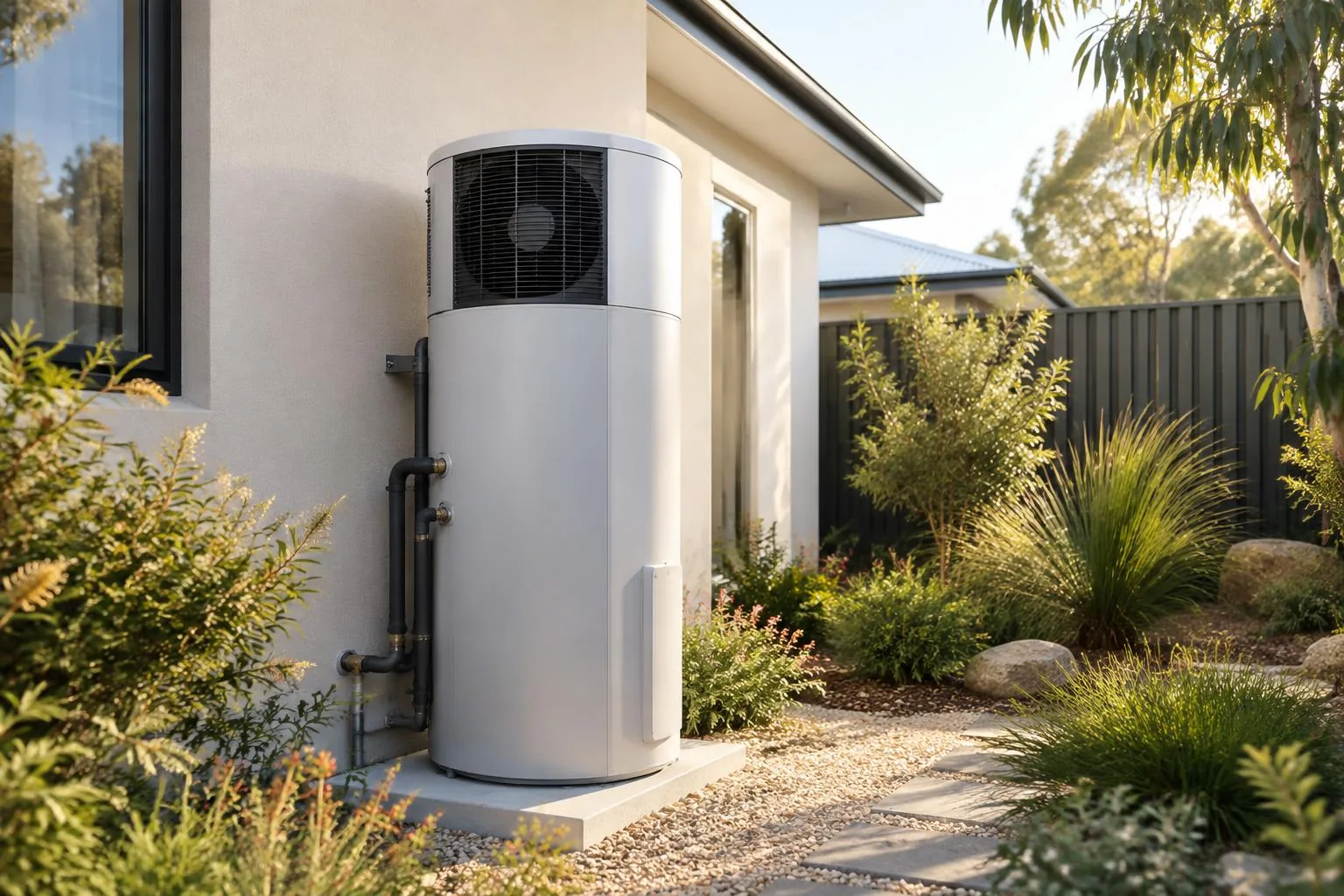
A heat pump works like a fridge in reverse: a fan draws in air, a refrigerant absorbs the warmth, and a compressor concentrates it into the water tank. Because it moves heat rather than creating it, one unit of electricity delivers three or more units of heat. That is where the 75% saving comes from and why it pairs so well with rooftop solar.
The federal incentive: STCs
Air source heat pumps are eligible for Small-scale Technology Certificates (STCs) under the federal Small-scale Renewable Energy Scheme, administered by the Clean Energy Regulator. The number of certificates depends on the model and your postcode zone, and the value is normally applied as an upfront discount in your quote; your installer handles the paperwork. It is not a cash payment you claim later.
State by state in 2026
Support varies widely by state. Victoria stacks three forms of help; elsewhere the federal STC discount does most of the work.
Victoria (VIC)
Solar Homes hot water rebate up to $1,000 (up to $1,400 for eligible locally made products) + VEU discount up to around $560 when replacing gas + federal STCs
From 1 March 2027, a gas hot water system that reaches end of life must be replaced with an electric system. Planning the switch early lets you claim the stacked support above.
New South Wales (NSW)
Energy Savings Scheme upfront discount, applied by the installer, with a boosted heat pump discount in eligible postcodes until June 2027 or when funding runs out
The discount is included in your quote rather than claimed afterwards; ask the installer to show it as a line item.
South Australia (SA)
Retailer Energy Productivity Scheme (REPS) offers for efficient hot water, particularly for low-income households
Offers vary by retailer, so ask what is available at your address before you commit.
QLD, WA, TAS, ACT & NT
No comparable state heat pump hot water rebate right now; the federal STC discount still applies nationally
Check energy.gov.au for any newer local programs before you buy; schemes open and close regularly.
Victoria's gas rule, explained
Under Victoria's electrification standards, from 1 March 2027 a gas hot water system that reaches end of life must be replaced with an electric system. If your gas unit is ageing, planning the switch before it fails, rather than during an emergency, gives you time to claim the Solar Homes rebate, the VEU discount and federal STCs together.
What it costs to run
Water heating is typically the second-largest slice of household energy use, roughly 15–30%. Because a heat pump moves heat rather than creating it, it delivers the same hot water on a fraction of the electricity. Two ways to stretch that further:
- Run it on a timer or solar soak. If you have rooftop solar, heating water in the middle of the day uses your own generation instead of evening grid power.
- Pair it with a controlled-load or off-peak tariff if you don't have solar.
Is it worth it for you?
It tends to stack up best when you are replacing an old electric storage or gas system, your household uses a moderate to high amount of hot water, and you can claim at least one state incentive on top of STCs. The weakest case is replacing a newer, efficient system purely for the rebate.
Before you accept a quote
- Ask the installer to itemise the STC discount and any state rebate or VEU/ESS discount in writing.
- Confirm the exact model is eligible for the incentives being claimed; not every unit qualifies for every program.
- Check the tank size suits your household; undersizing means the backup element runs more often.
- Ask about timer or solar-soak controls so the unit heats when your power is cheapest.
- Compare the whole installed price, including plumbing and electrical work, not just the unit.
Then run your own numbers in our heat pump running cost calculator. Calculator results are indicative estimates, not a quote or a guarantee.
Heat pump hot water questions, answered
A note on the numbers
Rebate amounts and eligibility change; confirm current settings with the relevant program before you commit. This guide is general information, not a quote or a guarantee of savings. Read our disclaimer.
Ready for cheaper hot water?
We'll match you with one verified, accredited installer who can confirm exactly which incentives your home qualifies for. Free, with no obligation.
Get my free quote